What Should A Homeowner Do When The Backyard Has No Access For A Crane Or Truck?
The most beautiful fully built studio is useless if it cannot reach the site. Narrow side yards, power lines, and mature trees rule out plenty of deliveries, but they do not rule out a premium studio if you plan around them.
Why access decides what you can actually buy
Prefab studios arrive in one of three broad forms: fully built modules, panelized kits, or materials for site assembly. A fully built module is finished in the factory, trucked to the street on a flatbed, and lifted into place by crane. It offers the highest factory finish and the fastest install, often a single day, but it requires either a clear path wide enough for the module itself or a crane with enough reach to lift it over whatever is in the way. Many suburban lots fail one or both tests. A side yard gate of a few feet, an overhead service drop, a mature oak, or a neighbor's fence can each make a module delivery impossible.
Homeowners often discover this after falling in love with a particular design, which is the wrong order. The honest first step is a site assessment: measure the narrowest point between the street and the studio location, note overhead wires, slopes, retaining walls, and anything else that cannot be moved, and photograph all of it. Good vendors will ask for this before quoting and some will send someone to look in person. If the answer is that a module cannot reach the site, the choice narrows to panelized systems, site-built construction, or an elaborate crane plan, and each has its own cost and quality profile. Related: What Separates A Real Garden Office From A Decorated Backyard Shed?
Keep reading: How Do You Choose A Backyard Studio That Works Year Round?, What Separates A Real Garden Office From A Decorated Backyard Shed?, Which Permits And Zoning Rules Apply Before Building A Garden Studio?. See how Studioshedr helps you a curated guide to premium garden offices and studios.
Panelized and flat-pack systems that walk through a gate
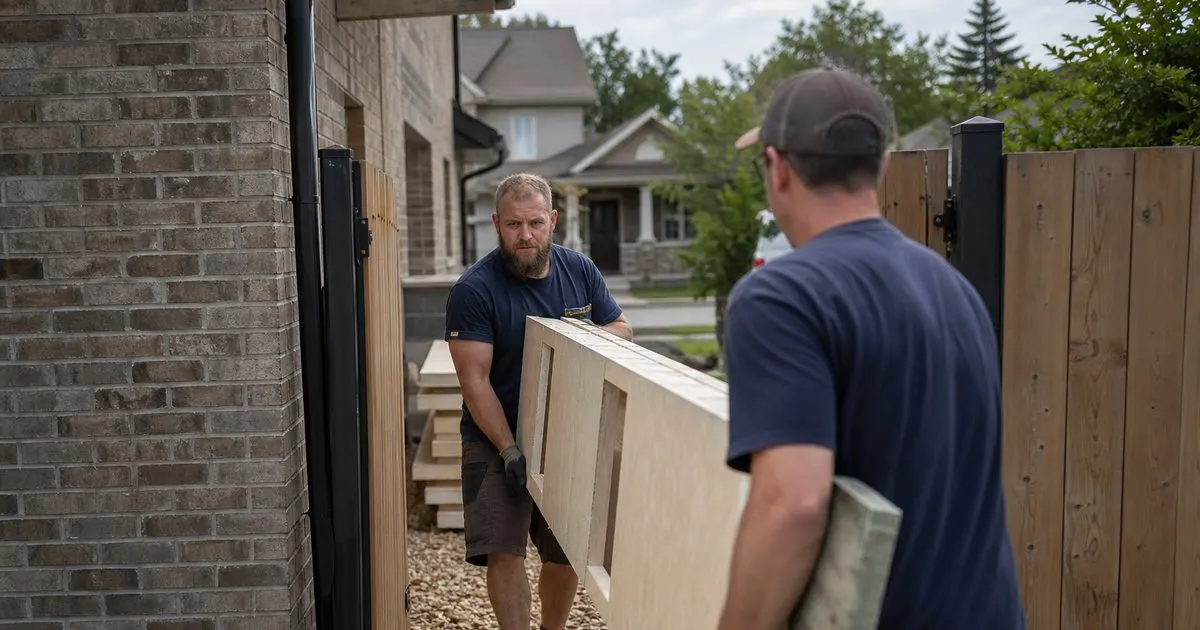
Panelized studios are built in the factory as wall, floor, and roof sections that two or three people can carry through a standard gate and assemble on the prepared foundation. The best of them arrive with windows, doors, insulation, and exterior cladding already installed in the panels, so the on-site work is mostly fastening, sealing joints, and finishing the interior. This preserves most of the factory precision that makes prefab appealing while solving the access problem completely. Assembly typically takes days rather than hours, and the crew needs a dry staging area and reasonably level ground to work on. Related: When Is A Prefab Studio Smarter Than A Custom Site Build?
The trade-offs sit at the joints. Every seam between panels is a place where air, water, and sound can find a way in if it is not detailed properly, so the quality of the panel connection system and the skill of the installation crew matter more than they would for a sealed module. Ask to see how panels join, how the joint is sealed, and whether the installers are the vendor's own crew or a local contractor working from instructions. Flat-pack and kit products go one step further toward site assembly and generally cost less, but they lean heavily on the competence of whoever builds them, and the finish can vary accordingly. For a premium result, a panelized system installed by the manufacturer's crew is usually the sweet spot on a constrained lot.
Crane over the house and other serious solutions
When a module is the only acceptable answer, a larger crane parked in the street can sometimes lift it clear over the house and set it in the backyard. This is routine for experienced riggers, but it is not casual. The crane company will want the module's weight, the pick radius, and a look at the site, and it will charge for a bigger machine and a longer setup. A street closure permit, traffic control, and a ground protection plan for the sidewalk and driveway are frequently required. Overhead power lines near the pick path can stop the plan entirely, because utilities will not always de-energize or move them on a homeowner's timeline. Related: Does A Backyard Studio Really Need Its Own Heating And Cooling?
Less dramatic options are worth exhausting first. A fence section can be removed and rebuilt for far less than a crane upgrade. A neighbor with a wide side yard may allow access in exchange for a written agreement, restoration of their lawn, and a bottle of something nice; get it in writing and make sure your contractor's insurance covers their property. Tracked equipment can move a smaller module across a lawn with mats protecting the turf. Some builders offer a split module design that arrives in two narrower pieces and is joined on site, which threads the needle between full factory finish and gate access. Each of these should be priced against a panelized alternative before anyone commits.
Questions to settle before you pay a deposit
The delivery plan should be in the contract, not in a conversation. Ask who is responsible if the module arrives and cannot be placed. Some vendors charge a failed delivery fee plus storage, others will not schedule delivery until they have signed off on access, and the second type is the one you want. Confirm exact dimensions of the widest and tallest component, the turning radius the truck needs at your street, and the clearance under any wires or branches on the route. Have the crew or a surveyor measure rather than trusting a tape held by a homeowner in the rain.
Then look at the ground the delivery will cross. Fresh sod, a septic drain field, an irrigation main, or a shallow gas lateral are all things a loaded truck or crane outrigger should not sit on, and utility locates should be called well before the delivery date. Confirm who restores the lawn, driveway, and fence afterward and to what standard. Finally, be candid with yourself about what the access constraint is costing. If solving it adds a large sum to the price of a module, that money may buy a better specified panelized studio with a more thoughtful interior, and the finished room is what you will actually live with. Related: Which Permits And Zoning Rules Apply Before Building A Garden Studio?
- Measure the narrowest point, overhead clearances, and slopes before choosing a studio, because access determines whether a fully built module is even an option.
- Panelized systems installed by the manufacturer's crew keep most of the factory quality while walking through a standard gate.
- A crane over the house, a removed fence section, a neighbor's side yard, or a split module can all work, but each should be priced against a panelized alternative.
- Put the delivery plan, failed delivery liability, utility locates, and site restoration in the contract before paying anything.

Julien Jimenez
Julien Jimenez is an independent software builder based in Paris. He designs, ships, and operates focused SaaS products for small businesses and independent professionals. Read the full author page.
Room To Think, Steps Away
A curated guide to premium garden offices and studios. Studioshedr is built to help you put this into practice.
Explore studiosMore from the Studioshedr blog
How Do You Choose A Backyard Studio That Works Year Round?
What Separates A Real Garden Office From A Decorated Backyard Shed?
Which Permits And Zoning Rules Apply Before Building A Garden Studio?
Get the complete backyard studios and offices guide
Our full buying guide, the price guide, and new research as we publish it. One email, no spam, unsubscribe any time.