How Much Electrical Service Does A Garden Office Actually Need For Daily Work?
A laptop and a lamp need very little, but the moment you add heating, cooling, and a second monitor the arithmetic changes. This guide walks through what to plug in, how the feed should be sized, and the trench work that quietly drives the cost.
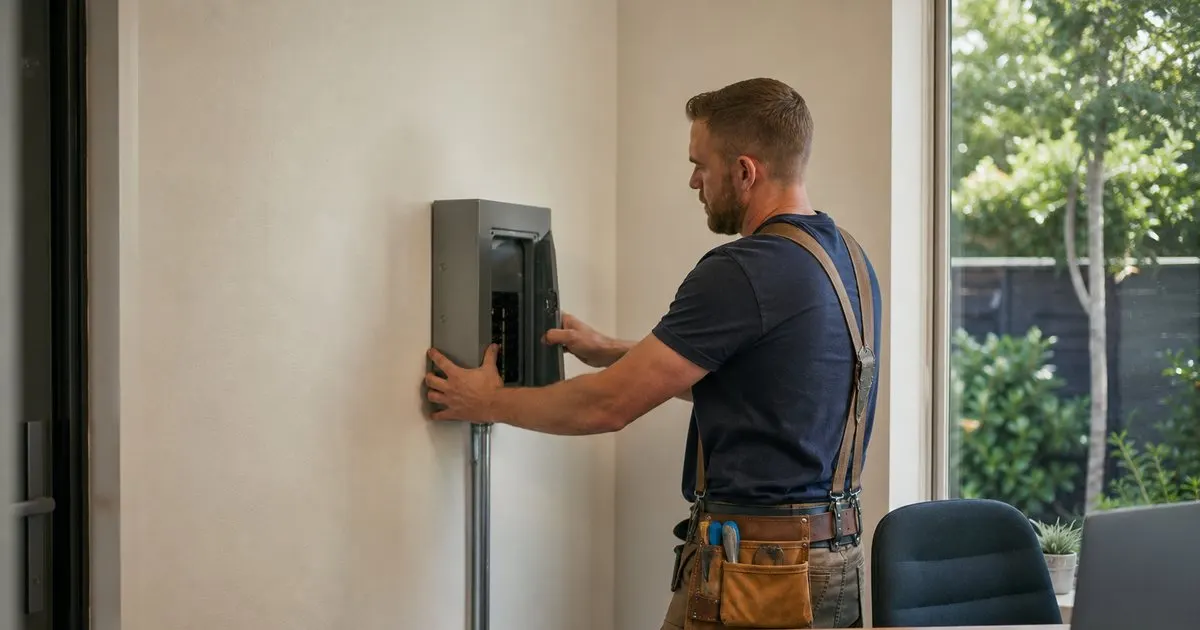
Start with an honest list of what you will plug in
Before anyone talks about amps, write down the equipment. A typical knowledge worker's setup, meaning a laptop, one or two monitors, a desk lamp, a small printer, and a phone charger, draws remarkably little. Add ceiling lights and a couple of convenience outlets and a single well-placed circuit could cover it. The picture changes the moment you add anything that makes heat or moves it. A ductless mini split, an electric baseboard heater, a portable space heater, a kettle, a small refrigerator, or a window air conditioner each pulls far more than the entire computer setup combined, and several of them want a circuit of their own.
The reason this matters is that heating and cooling loads are not optional in most of the country. A studio that is comfortable in April will be unusable in July or January without conditioning, and the equipment that provides it is usually the largest electrical load in the building by a wide margin. So the real question is not how much power the office needs today with a laptop on the desk, but how much the office needs on the hottest afternoon of the year with the mini split running, the lights on, and a video call in progress. That is the number your electrician will size around, and it is the number that determines whether a single circuit is enough or a subpanel is called for. Related: How Do You Choose A Backyard Studio That Works Year Round?
Keep reading: How Do You Choose A Backyard Studio That Works Year Round?, What Separates A Real Garden Office From A Decorated Backyard Shed?, Which Permits And Zoning Rules Apply Before Building A Garden Studio?. See how Studioshedr helps you a curated guide to premium garden offices and studios.
One circuit from the house, or a subpanel in the studio
The simplest approach is a single branch circuit run from a spare breaker in the main house panel out to the studio. It is the least expensive option and it is genuinely adequate for a studio that will only ever hold a desk, lights, and a laptop, especially in a mild climate where a small portable heater on the same circuit is the only seasonal addition. Its weakness is that everything shares one breaker. Run a heater and a microwave at the same time and the breaker trips, which gets old quickly in a room where you are trying to work.
A subpanel in the studio, fed by a larger feeder from the house, is the approach most premium installations end up with. It lets the electrician give the mini split its own circuit, put lighting on another, and spread receptacles across one or two more, so no single appliance can take down the whole room. It also makes future additions straightforward, because adding a circuit becomes a matter of installing a breaker in the studio rather than trenching again. The trade-offs are real: a subpanel needs a feeder sized for the total load, a disconnect at the studio in many jurisdictions, and enough spare capacity in the main house panel to support it. A licensed electrician will run a load calculation on the house before promising any of this, and if the main panel is already full, a panel upgrade can become part of the project. Related: What Separates A Real Garden Office From A Decorated Backyard Shed?
Trenching, conduit, and the costs nobody puts in the rendering
The wire itself is rarely the expensive part. Getting it from the house to the studio is. Underground feeders have to be buried to a depth that depends on the wiring method and local code, and the trench has to run from the house panel location, which is often on the far side of the house, to the studio, crossing whatever is in between. Lawns are easy. Patios, driveways, mature tree roots, irrigation lines, and gas or sewer laterals are not. Every one of those obstacles adds labor, and the cost of restoring the landscaping afterward is almost never in the vendor's quote because the vendor is not the one digging.
Conduit is worth insisting on even where direct burial cable is permitted. Wire in conduit is protected from shovels and roots, it can be replaced without re-trenching if it ever fails, and it makes upgrading the feeder later a pull rather than an excavation. Ask the electrician to lay a second, separate conduit for low voltage at the same time so that Ethernet or fiber to the studio does not share a pipe with power. Also plan for the code requirements that catch people off guard: ground fault protection for receptacles, arc fault protection where required, a weather-rated exterior receptacle, and the inspection that follows. Call for utility locates before anyone digs, because a severed gas line ends the project in the worst possible way. Related: Which Permits And Zoning Rules Apply Before Building A Garden Studio?
Sizing for the office you will have in five years
Almost every owner who installs the minimum ends up wishing they had installed a little more. The studio that starts as a laptop office becomes a place with a second desk for a partner, a small workshop bench, a treadmill, or an electric kettle and refrigerator for long days. A feeder and subpanel with a few spare breaker slots absorbs all of that without another trench. The incremental cost of upsizing the conduit and feeder while the trench is open is small compared with doing the job twice, which is the single most useful piece of advice an experienced electrician will give you. Related: Why Does Insulation Decide Whether A Studio Feels Like An Office?
Think about a few specific futures while the design is still on paper. If you might ever charge an electric vehicle or bike near the studio, a spare conduit toward the driveway is cheap now. If you want exterior path lighting between the house and the office, a dedicated circuit with a switch at both ends is far more pleasant than a string of solar stakes. A whole-building surge protective device at the subpanel protects the monitors and the mini split's control board from the kind of surge a detached structure on a long feeder is exposed to. None of these are glamorous, and none of them appear in the marketing photos, but they are what separate an office that still works well in a decade from one that becomes a frustration.
- Computers and lights need very little power; heating and cooling equipment is what determines how the studio feed must be sized.
- A single circuit suits a minimal office in a mild climate, while a subpanel with dedicated circuits is the norm for a premium, conditioned studio.
- Trenching, conduit, obstacles, and landscape restoration usually cost more than the wire, and they are rarely in the studio vendor's quote.
- Oversize the conduit and feeder while the trench is open, add a separate low voltage conduit, and leave spare breaker slots for the office you will have later.

Julien Jimenez
Julien Jimenez is an independent software builder based in Paris. He designs, ships, and operates focused SaaS products for small businesses and independent professionals. Read the full author page.
Room To Think, Steps Away
A curated guide to premium garden offices and studios. Studioshedr is built to help you put this into practice.
Explore studiosMore from the Studioshedr blog
How Do You Choose A Backyard Studio That Works Year Round?
What Separates A Real Garden Office From A Decorated Backyard Shed?
Which Permits And Zoning Rules Apply Before Building A Garden Studio?
Get the complete backyard studios and offices guide
Our full buying guide, the price guide, and new research as we publish it. One email, no spam, unsubscribe any time.