What Should A Studio Owner Do Each Season To Protect A Premium Build?
A well built garden studio asks very little, but the little it asks is seasonal and specific. This is the calendar of small tasks that keeps the cladding, roof, seals, and mechanical systems performing and the warranty intact.
Spring: find out what winter did
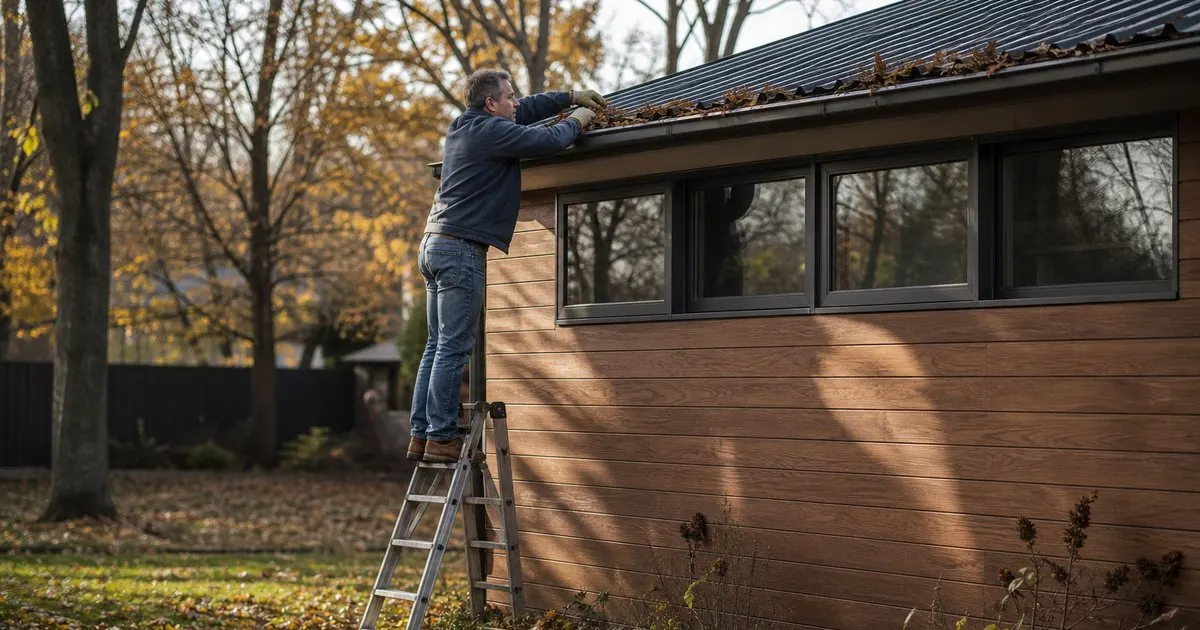
Spring is the inspection season. Walk the exterior slowly and look at every joint where two materials meet: window frames to cladding, door frames to threshold, roof edge to wall, and the base of the cladding above the foundation. Sealant that has pulled away, cracked, or gone chalky should be cut out and replaced with a compatible product before the rains arrive. Check that the gutters are clear and that downspouts still discharge away from the building, since ice and wind can shift a splash block or crack a fitting. Look under the floor if the studio sits on piers, both for standing water and for signs that anything has moved in over the winter. Related: Which Permits And Zoning Rules Apply Before Building A Garden Studio?
Inside, check the corners and the base of the walls for staining or a musty smell that suggests moisture got in. Open and close every window and door and note any that have gone stiff or no longer latch cleanly, which can indicate seasonal movement in the foundation or a seal that needs adjustment. Clean or replace the mini split's filters, run it in both heating and cooling to confirm both modes still work, and clear any debris from around the outdoor unit. Spring is also the time to walk the grading around the studio and make sure the ground still slopes away on every side, because settling and mulch can reverse it in a year or two. Related: How Do You Choose A Backyard Studio That Works Year Round?
Keep reading: How Do You Choose A Backyard Studio That Works Year Round?, What Separates A Real Garden Office From A Decorated Backyard Shed?, Which Permits And Zoning Rules Apply Before Building A Garden Studio?. See how Studioshedr helps you a curated guide to premium garden offices and studios.
Summer: sun, heat, and the exterior finish
Summer is hardest on the finish. Ultraviolet light breaks down the oils and pigments in stained wood cladding and fades the surface of painted materials, and the south and west elevations age faster than the north. Wood cladding that is meant to stay a particular tone typically needs a fresh coat of penetrating oil or stain on a cadence that depends on the product and the exposure, often every few years on the sunny sides and less often elsewhere. Cladding that is meant to weather to silver can be left alone as long as the water management behind it is working, but it still benefits from an occasional gentle wash to remove pollen and mildew.
Mechanical systems work hardest now. The mini split's condensate drain should be checked for a clear flow, because a clogged drain will back up and drip down the interior wall on the hottest day of the year. The outdoor unit needs a few feet of clear space and a rinse to remove cottonwood fluff and dust from the coil. Inside, watch the humidity: a tightly built studio with the cooling running can be quite dry, while a studio left closed and unconditioned for weeks can become humid enough to encourage mildew on fabrics and books. If the studio will be unused during a vacation, leaving the mini split on a dehumidify or moderate cooling setting is usually cheaper than dealing with the consequences. Related: When Is A Prefab Studio Smarter Than A Custom Site Build?
Fall: prepare for freeze and dark
Autumn tasks are about water and heat. Clear the gutters after the leaves drop, not before, and check that the downspouts and any drain lines are flowing. Trim back branches that have grown over the roof, because they drop debris into gutters, scrape the roofing in wind, and give squirrels and raccoons a bridge to the building. Inspect the roof membrane or metal from the ground or a ladder for lifted seams, punctures from fallen branches, or pooling water after a rain, and have anything suspicious looked at before the freeze. Check the weatherstripping on doors and the sweep at the threshold, since these small parts do most of the work of keeping cold air out.
If the studio has plumbing, this is the month to winterize it or to confirm the heat will stay on all winter. A supply line that will not be used should be shut off, drained, and left open; an exterior hose bib should be disconnected from any hose and, if it is not the frost-free type, drained too. Run the heating mode on the mini split and any backup heater to be sure they work before you need them. Finally, look at the path between house and studio. A path that was fine in September becomes a hazard in December when it ices over, so exterior lighting, a non-slip surface, and a plan for snow are worth arranging while the weather is still mild. Related: Can A Garden Office Stay Quiet Enough For Deep Focused Work?
Winter, and the every-few-years items
Winter maintenance is mostly watching. In heavy snow regions, a low slope roof may need snow cleared with a roof rake before the load approaches what the structure was engineered for, and ice building at the roof edge is a sign that warm air is escaping through the ceiling and worth investigating in spring. Condensation on the inside of windows on cold mornings tells you the studio is running humid, and cracking it open briefly or running the mini split's fan usually resolves it. Keep the outdoor unit of the mini split clear of drifting snow so it can breathe, and do not let ice build on top of it.
Some tasks fall outside the annual cycle. Roof membranes and metal roofs benefit from a professional inspection every few years, and painted or stained surfaces need a full recoat on a schedule the product manufacturer sets. Sealant joints have a finite life and will all need renewal eventually. Keep a simple log of what was done and when, with photographs, because most warranties require evidence of reasonable maintenance and a dated record turns an argument into a conversation. A premium studio that gets this modest attention will look and perform much as it did on delivery day for a very long time, and the difference between it and a neglected one is visible within a few years.
- Spring is for inspection: sealant joints, gutters, grading, the underside of the floor, and the mini split's filters and both operating modes.
- Summer punishes the exterior finish and the cooling system, so refresh wood coatings on sunny elevations and keep the condensate drain and outdoor coil clear.
- Fall is for water and heat: clear gutters after leaf drop, trim branches, check the roof, test heating, winterize any plumbing, and light the path.
- In winter watch snow load and condensation, and keep a dated maintenance log with photos, since warranties depend on evidence of reasonable care.

Julien Jimenez
Julien Jimenez is an independent software builder based in Paris. He designs, ships, and operates focused SaaS products for small businesses and independent professionals. Read the full author page.
Room To Think, Steps Away
A curated guide to premium garden offices and studios. Studioshedr is built to help you put this into practice.
Explore studiosMore from the Studioshedr blog
How Do You Choose A Backyard Studio That Works Year Round?
What Separates A Real Garden Office From A Decorated Backyard Shed?
Which Permits And Zoning Rules Apply Before Building A Garden Studio?
Get the complete backyard studios and offices guide
Our full buying guide, the price guide, and new research as we publish it. One email, no spam, unsubscribe any time.